
 Business License

What Ice Maker Capacity Do I Need? A Practical Guide for Commercial Buyers
When Maria opened her seafood counter in Miami, she ordered a commercial ice maker rated at 90 kg per day. The catalog number looked generous for a shop that served about 120 customers on a busy Saturday. By 2 p.m. on her third weekend, the bin was empty and she was sending staff to buy bagged ice. The machine was not broken. Her kitchen ran at 32 degrees C, the incoming water measured 21 degrees C, and the peak demand was nearly double her average weekday. The catalog capacity had been tested at 21 degrees C air and 10 degrees C water, so real output in her space was far lower.
This story repeats in every city where buyers compare the catalog capacity of an ice maker machine against the actual needs of a hot kitchen, a busy bar, or a processing line. If you are asking, "what ice maker capacity do I need," the answer starts with your application, not the machine label. Daily output is only one entry on a longer checklist that includes ice type, peak demand, storage, site conditions, and the documentation behind the number.
In this guide, you will learn how to estimate daily ice demand, adjust for real operating conditions, match the equipment category to your volume, and confirm the model-specific facts before you request a quotation.
Already have your daily use estimate and site conditions? Contact the sales team to request current model documentation.
Start with the application, not the capacity
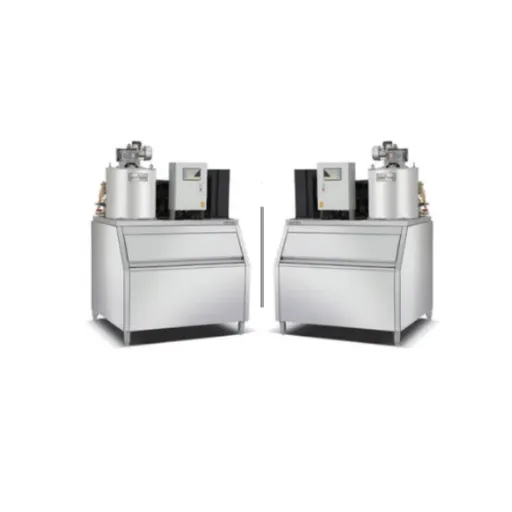
Capacity is a single number. Your operation is a pattern of use. A restaurant that opens for dinner only needs a different profile than a 24-hour hotel or a seafood display that runs continuously. Before you compare models, define the application clearly.
The first question is what the ice will do. Beverage service, food display, ingredient cooling, blended drinks, and medical or laboratory use all create different demand curves. The second question is who will use it. A self-service hotel dispenser, a bartender working peak hours, and a processing line operator have different access patterns and speed requirements.
XiAn Wisdom Computer Info&tech Co., Ltd lists ice makers, flake ice machines, dry ice machines, and ice cream machines among its product categories. The right category depends on the ice form and application, so confirm which models are available for your market before selecting a unit.
Ice type changes the math
Different ice forms have different densities, melt rates, and uses. Cubed ice is common for general beverage service. Flake ice is often used for food display, seafood counters, and some processing applications because it packs around products. Nugget ice is popular in healthcare and quick-service drinks because it is softer and easier to chew. Gourmet or top-hat ice is typically used in premium bars where appearance matters.
Each form also has a different production profile. A flake ice machine may be sized differently from a cuber for the same total volume because the ice is used continuously rather than in bursts. If your application needs flake ice, review the flake ice machine options separately, since output, storage, and water requirements differ from cubed ice.
Typical use cases by industry
The table below shows common patterns. Treat these as starting points, not model recommendations. Confirm every figure against the current datasheet for the unit you are considering.
| Application | Common ice form | Starting point per unit | What to verify |
|---|---|---|---|
| Full-service restaurant | Cubed or gourmet | 0.5 to 1.0 kg per seat per day | Peak covers, beverage mix, bar usage |
| Quick-service restaurant | Cubed or nugget | 150 to 250 g per serving | Peak-hour demand, drive-through volume |
| Hotel self-service | Cubed or nugget | 2 to 3 kg per room per day | Occupancy rate, breakfast and event usage |
| Seafood counter or display | Flake | Depends on case length and display depth | Continuous display need, melt rate |
| Healthcare | Nugget or cubed | 3 to 5 kg per bed per day | Patient count, cafeteria, therapy use |
| Bar or cocktail lounge | Gourmet or cubed | 1 to 2 kg per seat per day | Peak hours, cocktail menu |
| Processing or industrial | Flake or cubed | Process-specific | Batch size, cooling duty, uptime |
These ranges are industry rules of thumb. They help you prepare an enquiry, but they are not a substitute for model-specific documentation.
How to estimate your daily ice demand
The safest approach is to measure or estimate actual use, not to guess from the number of seats. Start with a typical day, then adjust for the busiest day you expect.
Count covers and servings, not seats
A 60-seat restaurant that turns tables twice during lunch and again during dinner may serve 180 covers. A 60-seat cafe that serves 90 covers will need roughly half the ice. Count the number of customers or servings, then multiply by the ice mass per serving.
For example, if a bar serves 200 drinks on an average night and each drink uses about 150 g of ice, base demand is 30 kg. Add kitchen use, water station use, and any backup needs. Repeat the calculation for your peak night. The peak number is usually more important than the average, because an undersized machine runs out when revenue is highest.
Build a peak-day forecast
Track ice use across a full week if you already operate a similar site. If you are opening a new location, use the forecast from your business plan and add a buffer for unexpected demand. Seasonal factors matter too. A beachside venue may see 50% higher demand in summer. A hotel near a conference center may spike during events.
When Marcus opened a specialty coffee shop in Toronto in March 2024, he calculated 25 kg per day based on 150 blended drinks and a cold-brew station. By July, warm weather pushed blended drink sales up 40%, and a weekend festival added another 25%. His average had been correct for spring, but his peak was nearly double. He upgraded to a machine with a larger bin and avoided a second summer of emergency ice runs.
Add a sensible safety margin
Most operators add 10% to 30% to the peak estimate. This margin covers growth, equipment downtime, unexpected heat waves, and staff over-scooping. A larger margin also reduces the chance that a hot kitchen pulls the machine below its rated output.
The final demand number should be expressed in kilograms per 24 hours at the conditions of your space. That is the number you compare against the rated capacity on a datasheet, not the number of seats or a generic chart.
Why production capacity and storage capacity are two numbers
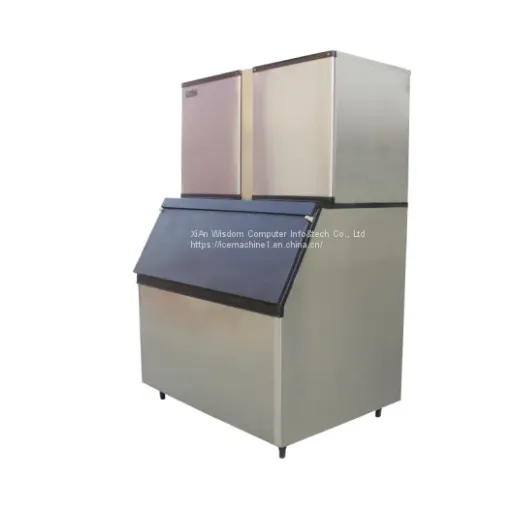
An ice maker produces ice continuously over 24 hours. A bin stores it until use. These are separate capacities, and both must match your pattern of use.
A machine that produces 100 kg per day and has a 25 kg bin will deliver 100 kg across the day, but only 25 kg is available at any moment. If your peak hour consumes 30 kg, you will run out even though total daily production is sufficient. Conversely, a large bin with a small head may fill overnight and satisfy morning demand, but it may not recover quickly enough after lunch.
Bin size and refill cycles
Estimate how much ice you need at the start of each service period and how fast the machine can replace it. A breakfast buffet, a lunch rush, and a dinner rush are three separate cycles. The bin must cover the largest single draw plus a recovery allowance.
If you need 40 kg ready at 11 a.m. and the machine produces 20 kg overnight, the bin must hold at least 20 kg at opening. If the lunch rush consumes 30 kg between 12 p.m. and 2 p.m., the machine must produce roughly 15 kg during those two hours to keep up. Real output per hour depends on ambient conditions, so do not assume linear production.
Remote versus self-contained units
Self-contained units have the evaporator and storage bin in one cabinet. They are compact but limited in capacity. Remote condensing units move heat outside the building, which can improve efficiency and reduce noise in the service area. Modular ice maker heads sit on top of separate bins and offer the widest range of production and storage combinations.
Your choice affects capacity planning. A remote unit may maintain output better in a hot kitchen because heat is rejected outside. A modular head lets you size the bin independently from the production rate. Match the configuration to the space, ventilation, and use pattern.
Site conditions that change real output
Ice maker ratings are tested at specific conditions, often 21 degrees C ambient air, 10 degrees C incoming water, and stable power. Your site may differ. Small differences add up quickly.
The Air-Conditioning, Heating, and Refrigeration Institute (AHRI) publishes test standards and certification programs for commercial ice makers. Look for AHRI ratings that include capacity at standard rating conditions and, when available, at part-load or high-temperature conditions. Always request the test conditions that apply to the quoted capacity.
Ambient temperature and ventilation
Hot air reduces ice production and increases energy use. A machine installed next to an oven line, in a small closet, or above a grill will perform below its catalog rating. Manufacturer datasheets usually show output at multiple ambient temperatures. If your space runs at 32 degrees C for several hours a day, request the output at that condition, not the ideal 21 degrees C figure.
Ventilation also matters. Self-contained units need clear air intake and exhaust. Blocking either side with storage boxes or wall panels traps heat. Modular units with remote condensers need correct refrigerant line lengths and outdoor airflow. Before ordering, review the ice maker installation requirements for the model under consideration.
Water temperature and pressure
Warm incoming water must be cooled before it freezes, which slows production and increases energy use. Water above 21 degrees C can reduce output significantly compared with the 10 degrees C test condition. If your building has warm tap water in summer, specify the expected range in your enquiry.
Pressure and quality matter too. Low water pressure can slow fill cycles. Hard water scale can coat evaporators and reduce efficiency. A water filter and scale inhibitor may be required to protect the unit and maintain output. Ask the supplier which water-treatment steps apply to the selected model.
Altitude and water quality
High-altitude locations have lower air pressure, which affects condenser performance. Some manufacturers publish altitude derating factors. Water with high mineral content or sediment can also reduce heat transfer on the evaporator. A pre-installation water test is often worthwhile.
Match the equipment category to your volume
Once you know your daily demand and site conditions, choose the equipment category. Each has a practical capacity range and installation footprint.
Undercounter and countertop ice makers
Undercounter units fit below a bar or counter and are often used where space is limited and demand is moderate. They combine production and storage in one cabinet. Typical catalog ratings range from about 20 kg/day to 150 kg/day, though real output depends on conditions. They are a common choice for small cafes, bars, and office kitchens.
Countertop dispensers produce less ice but store and dispense it cleanly. They are often used in healthcare and self-service areas where sanitation and portion control matter more than total volume.
Modular ice maker heads and separate bins
Modular heads mount on top of storage bins, ice dispensers, or soda fountains. They are selected when daily demand exceeds what an undercounter unit can produce or when storage must be larger than the built-in bin. Production rates vary widely. Storage bins can be sized separately, so this category suits restaurants, hotels, and processing operations with high or variable demand.
When you choose a modular head, confirm the bin width matches the head. A 30-inch head on a 22-inch bin will not work without an adapter kit. Also confirm the total height fits under the ceiling and any overhead shelving.
Hotel dispensers and flake ice machines
Hotel ice dispensers are designed for guest self-service. They usually hold 50 to 150 kg and produce enough overnight to refill. Flake ice machines serve display and cooling applications where ice shape matters more than cube clarity. If your application needs flake ice, the sizing method is the same, start with peak demand and storage, then confirm output under your site conditions.
Confirm model-specific documentation before ordering
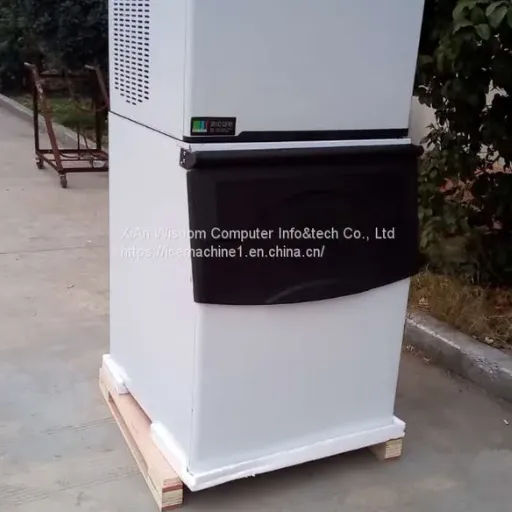
A capacity guide can only point you toward the right questions. The final answer comes from the datasheet, manual, and quotation for the exact model. Before you order, request documentation that covers at least the following points.
What to request with your quotation
Model number and production rate. Confirm the capacity at your expected ambient temperature and water temperature, not only at standard test conditions.
Electrical requirements. Record voltage, frequency, phase, and maximum current. Verify compatibility with your supply and local regulations.
Water supply and drainage. Confirm inlet size, pressure range, flow rate, and drain connection type.
Dimensions and clearance. Check width, depth, height, and the minimum clearance for ventilation and service access.
Storage bin capacity. Confirm usable bin volume and whether the bin is included or ordered separately.
Refrigerant and environmental data. Record refrigerant type and any regional restrictions or phase-out schedules.
Certifications and compliance. Ask for the standards the model meets for your destination market. In food-service applications, equipment sanitation standards such as those published by NSF and the FDA Food Code are commonly referenced.
Warranty, service, and spare parts. Request written confirmation of warranty terms and what support documentation is available.
Keep commercial information separate from marketing claims. The company states that quality management and after-sales support are priorities, but you should still request written terms for the specific model and order.
Common mistakes to avoid
Even experienced buyers make these errors when sizing a commercial ice maker.
Using the catalog capacity as a guarantee. Catalog numbers are measured under controlled conditions. Real output in a hot kitchen with warm water will be lower.
Ignoring the peak day. Average daily demand is not the number that matters. Size for the busiest day you plan to serve.
Forgetting storage. A machine that produces enough ice across 24 hours can still run out during a one-hour rush if the bin is too small.
Skipping site measurements. Ventilation, ceiling height, door widths, and floor drains all affect which model fits and how it performs.
Mixing ice types. A cube ice requirement cannot be met by a flake ice machine, and vice versa. Confirm the ice form with the supplier.
Overlooking water treatment. Scale, sediment, and chlorine can damage the unit and change output. Include water treatment in the budget.
When a procurement team in Dubai replaced an old machine in 2024, they selected a unit based on the old model's badge capacity without checking the new site's higher ambient temperatures. The new machine was rated at the same number, but its real output dropped by nearly 20% in summer. They solved the problem by adding a remote condenser during the next upgrade. The lesson was simple: the badge number is a starting point, not the final specification.
Conclusion
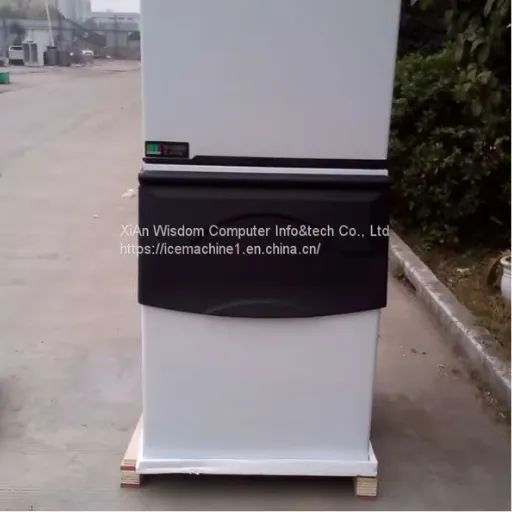
Choosing the right ice maker capacity means moving from a simple question to a short list of confirmed facts. Start with your application, estimate peak daily demand, add a safety margin, and match production and storage to your service pattern. Then adjust for the site conditions that change real output, including ambient temperature, water temperature, ventilation, and altitude.
Use an ice maker selection guide to organize your requirements before contacting suppliers. When you are ready, request the current datasheet for the exact model and confirm that the rated capacity applies to your operating conditions. A few minutes of documentation review can prevent the cost and inconvenience of a machine that runs out on your busiest day.
Prepare your application, peak demand, and site conditions, then contact the sales team to request model documentation and a tailored quotation.
Recently Posted
-
How to request a technical quotation for industrial equipment
August 17, 2026A purchasing assistant sends a one-line email to five suppliers: "Please quote your best price for a water pump." Two we Read More
 -
Custom mold drawing and tolerance requirements for buyers
August 17, 2026A custom mold arrives after eight weeks of tooling work. The first trial parts come off the press, and the snap-fit housing will n Read More
 -
What Information Is Needed for a PVC Molding Machine Enquiry
August 17, 2026A buyer who sends a PVC molding machine enquiry without the right technical details often receives quotes that cannot be compared Read More
 -
Power supply documentation checklist for industrial buyers
August 17, 2026Last March, Elena Vasquez received a shipment of frequency power supplies for a new cold-storage line. Elena is a procurement mana Read More

Contact Us
Recommended Products
-
 Large Capacity Ceiling Mounted Space Saving Indoor Pool DehumidifierNegotiableMOQ: 1 Piece
 -
Commercial Home Use Bathroom Dehumidification Swimming Pool Ceiling Mounted Mini DehumidifierNegotiableMOQ: 1 Piece
-
Greenhouse Grow Room Industrial Ceiling Mounted Duct Indoor Pool DehumidifierNegotiableMOQ: 1 Piece
-
Duokai OEM Indoor Dehumidifier Portable Swimming Pool Dehumidifier in Stock With CENegotiableMOQ: 1 Piece
-
High Quality Low Voltage ODM & OEM PLC Distribution CabinetNegotiableMOQ: 1 Set
-
Amy Autonomous Food Delivery Service Robot for Food Service in Hotels, Restaurants, and Commercial VenuesNegotiableMOQ: 1 Piece
-
6-Axis Automated Arc Welding Workstation for Steel Structure FabricationNegotiableMOQ: 1 Piece
-
Intelligent Inter-Row Weeding Robot Mower for Precision Agricultural CultivationNegotiableMOQ: 1 Piece
-
100kg Capacity Tumble DryerNegotiableMOQ: 2 Sets
-
Saladin Type Malt Production LineNegotiableMOQ: 1 Set
-
Seawater Desalination SystemUS$ 2000 - 1000000MOQ: 1 Set
-
High Speed Synthetic Lane Bowling Ball ReturnUS$ 50 - 2000MOQ: 10 Pieces
-
6-Axis Industrial Welding Robot for H-Beam Automatic Rail Welding StationNegotiableMOQ: 1 Piece
-
Long‑Reach Welding Robot JZJ06C‑180 6KG 1800mm Cutting ApplicationNegotiableMOQ: 1 Piece
-
Steering Gear Steering-sensitive Automotive PartsNegotiableMOQ: 100 Pieces