
 Business License

Refrigerated cabinet power and temperature requirements: a buyer's checklist
In March 2025, a buyer named Elena took delivery of three refrigerated cabinets for a grocery store her company was fitting out. The cabinets looked perfect on paper. Within two weeks, the compressors ran nonstop, the displays crept above the target temperature every afternoon, and one unit shut down on thermal overload. The problem wasn't the cabinets. It was the 38 °C kitchen-adjacent wall they stood against, on a circuit shared with two ovens.
Situations like this (illustrative, but drawn from a pattern buyers report again and again) explain why refrigerated cabinet power and temperature requirements deserve attention before you compare prices. A cabinet is a promise: hold this temperature, in this environment, on this electrical supply. Break any leg of that triangle and the promise fails.
This guide gives you the checklist that prevents Elena's outcome. You'll define your temperature target, confirm the climate class and ambient rating, match voltage and frequency to your site, plan installation conditions, and know which documents to request before ordering. Figures here are general guidance; confirm model-specific data with current documentation.
Why power and temperature decide whether a cabinet works
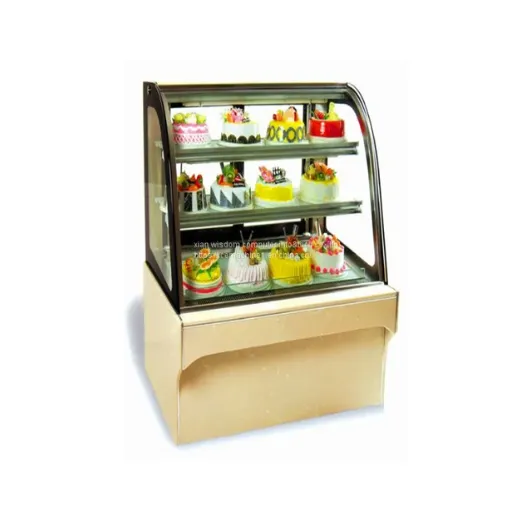
A refrigerated cabinet removes heat from an insulated box and rejects that heat into the room. Two external conditions control how well it can do that job:
The electrical supply feeding the compressor and fans.
The ambient environment surrounding the cabinet.
Get the supply wrong and the compressor struggles or burns out. Get the environment wrong and the cabinet can't reject heat fast enough, so internal temperature rises no matter what the thermostat says. Everything else in this article is detail on those two points.
Already measuring your site? Hold on to your ambient temperature and circuit details. You can request product information for the refrigerated cabinet category at any point, and the checklist below will make that enquiry sharper.
What temperature requirements should you define first?
Start with what you're storing, not with the cabinet. A defined target narrows the field faster than any brochure.
Set the storage temperature range
Ask the people who own the product: what temperature must the stock hold, and how much tolerance exists? Common reference points include:
Chilled food and beverages: roughly 0-5 °C for most perishables. The US FDA Food Code, for example, sets 5 °C (41 °F) as the cold-holding ceiling for temperature-controlled foods (see the FDA Food Code page).
Frozen goods: -18 °C or below is the widely used frozen-storage benchmark.
Wine, pharmaceuticals, flowers, and specialty stock: each carries its own band, and stability matters as much as the setpoint.
Write your requirement as a range with a hard ceiling, for example "hold 2-4 °C, never above 5 °C." That sentence tells a supplier more than "keep drinks cold" ever will.
Ask about pull-down and recovery
Holding temperature is one test. Two others matter in daily use:
Pull-down: how fast the cabinet cools warm stock after loading.
Recovery: how fast it returns to setpoint after the door opens.
A busy retail display might see 40 door openings an hour. A back-of-house cabinet might see five. If your use involves frequent loading of warm product, say so in the enquiry, because it changes the capacity the supplier should recommend.
Check the climate class and ambient rating
Here's the requirement buyers miss most, and the one that sank Elena's installation. Manufacturers rate cabinets for a maximum ambient temperature and humidity, expressed through climate classes. The naming varies by standard, but the idea is constant: a cabinet rated for a temperate room won't hold temperature in a hot kitchen or an unconditioned space in a warm climate.
When you review a datasheet, look for:
The rated ambient temperature (for example, designed and tested at 25 °C, 32 °C, or 40 °C).
The climate class designation, if stated, with the test standard named.
The relative humidity condition attached to the rating.
Then measure your actual room. Record the warmest realistic condition, not the average. A cabinet specified for a 25 °C test condition, installed against a 38 °C wall, has no margin left, and the compressor pays the difference.
What power requirements should you confirm?
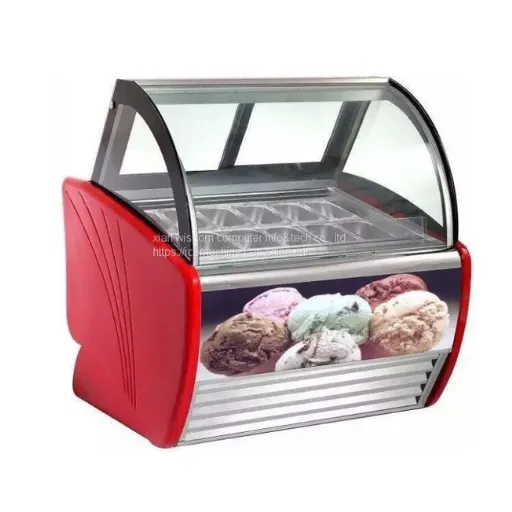
Electrical mismatches stall more cross-border equipment orders than cooling problems do. Work through four checks.
Voltage and frequency
Confirm both numbers, because they travel together:
220-240 V / 50 Hz is standard across much of Europe, Asia, Africa, and the Middle East.
115-120 V / 60 Hz is standard in North America and parts of Latin America and Asia.
Three-phase supply may apply to larger cabinets or multi-compressor units.
A compressor motor wound for 50 Hz runs faster and hotter on a 60 Hz supply, and the reverse mismatch cuts capacity. Consider an illustrative scenario: Tomasz, a distributor, received a 2024 shipment of cabinets built for 220 V / 50 Hz, destined for a client whose site supplied 60 Hz. Every unit ran, but compressors overheated within months, and replacing them across 10 sites cost around USD 3,500 in parts and labor. The order form never asked about frequency. Now his does.
Running current, starting current, and the circuit
Compressors draw a brief surge at startup, several times their running current. Confirm:
Rated power input (kW or W) and rated current (A) from the datasheet.
Starting current, or confirmation that the cabinet suits a standard circuit.
A dedicated circuit for each cabinet where the manual requires one. Sharing a circuit with ovens, fryers, or other heavy loads invites nuisance trips and voltage drops.
Plug, connection, and destination-market documents
A plug is a small thing until 40 cabinets arrive with the wrong one. Confirm the plug type or hard-wired connection, the cable length, and which electrical and safety documents apply to your destination market. Don't assume a model sold in one region carries the paperwork for another.
Energy consumption
Ask for the stated energy consumption (kWh per 24 hours) and the test conditions behind it. Programs such as ENERGY STAR's commercial refrigeration guidance show how much efficiency varies within the category, and consumption figures only compare fairly when the test conditions match. If energy cost drives your decision, request documented figures for the exact model rather than a category-level claim.
How installation conditions change both requirements
The same cabinet behaves differently depending on where you put it. Before finalizing a model, walk the intended location with this list:
Ventilation clearance: condensers need breathing room. Note the clearance the manual specifies at the back, sides, and top, and check the site actually offers it.
Heat sources nearby: ovens, fryers, dishwashers, boilers, and sun-facing windows all raise the effective ambient temperature around the cabinet.
Room ventilation and air conditioning: a hot room with no air movement pushes the cabinet outside its rated conditions even when the thermostat reads lower elsewhere.
Floor strength and leveling: a loaded cabinet can weigh several hundred kilograms; an unlevel cabinet strains doors and door seals.
Door swing and workflow: doors that stay open longer (or get propped open during restocking) multiply recovery load.
A fifteen-minute site walk answers questions that no listing page will. Bring a thermometer, and measure at the cabinet's proposed position, at the warmest time of day.
Which documents should you request before ordering?
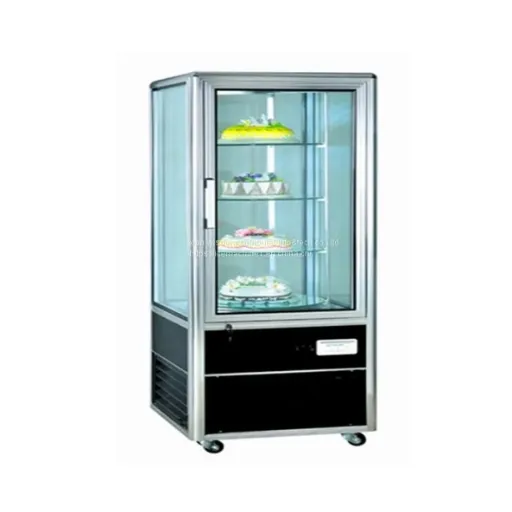
Two listings can describe similar-looking cabinets with different engineering underneath. Documentation is how you tell them apart. For each candidate model, request:
A datasheet stating temperature range, rated ambient temperature, and climate class with the test standard.
Rated power input, rated current, voltage, and frequency, plus plug or connection details.
Energy consumption per 24 hours with its test conditions.
Dimensions, internal volume, shelf loading, and weight.
Refrigerant type and charge, since refrigerant rules differ by destination market.
The installation, operation, and maintenance documentation in a language your team reads.
The electrical and safety documentation applicable to your market.
Compare datasheets line by line, at the same conditions. If a supplier can't state the ambient rating or test conditions, treat that as an answer in itself.
Suppliers differ in how much they publish upfront. XiAn Wisdom Computer Info&tech Co., Ltd lists refrigerated cabinets among its product categories, and as with any supplier, you should confirm temperature range, volume, dimensions, and destination-market requirements for the exact model under consideration. The company states that quality management and after-sales support are central to its service approach; ask which documents back that for your shortlisted model.
Ready to shortlist? Gather your target temperature range, warmest ambient reading, and supply voltage and frequency, then request a quotation with those figures attached. You'll get a recommendation you can check against documented specifications.
Plan maintenance and temperature monitoring from day one
Power and temperature requirements don't end at installation. Condenser coils load up with dust and grease, door gaskets harden, and drains block, and each one raises energy use while lowering cooling margin. A basic routine keeps the cabinet inside its design envelope:
Clean the condenser coil at the interval the manual states, more often in greasy or dusty kitchens.
Inspect door gaskets monthly; a folded or cracked gasket leaks cold air around the clock.
Check and clear the condensate drain so defrost water leaves the cabinet instead of pooling.
Verify the display thermometer against a handheld reference a few times a year.
Log temperatures daily where food safety rules or quality systems require records.
An illustrative example makes the stakes concrete. The kitchen team at a 120-seat hotel restaurant skipped condenser cleaning for nine months through 2024. Energy consumption climbed, the cabinet struggled through each summer service, and a compressor replacement in October cost about USD 1,200, plus a written-off weekend of dessert stock. After the team added a monthly coil check to the closing routine, the replacement unit ran through the next summer without a single high-temperature alarm.
Also ask the support questions before you buy: manual availability, spare-parts supply for gaskets and controllers, warranty scope, and the service process in your market. Written answers beat verbal assurances every time.
Frequently asked questions
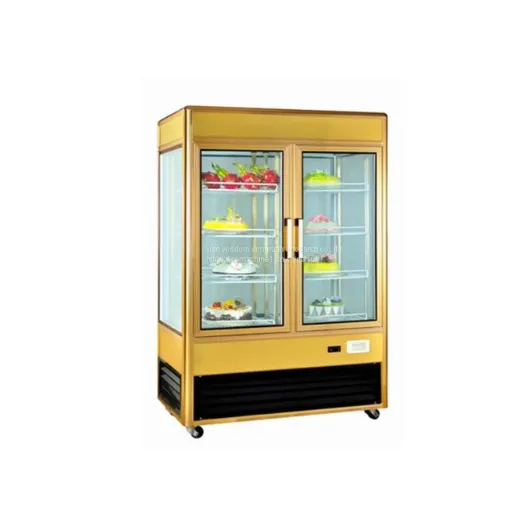
What temperature should a refrigerated cabinet hold?
It depends on what you store. Chilled perishables sit at 0-5 °C in most food operations, frozen goods at -18 °C or below, and specialty stock like wine or pharmaceuticals follows its own documented band. Define the range from your product requirements, then ask suppliers to confirm the model holds it at your ambient conditions.
Can a refrigerated cabinet share a circuit with other equipment?
It's risky. Compressors draw a startup surge several times their running current, and heavy loads like ovens on the same circuit cause voltage drops and nuisance trips. Follow the manual's guidance, and plan a dedicated circuit where it's required.
What does climate class mean on a datasheet?
It's the ambient temperature and humidity the cabinet was designed and tested against. A unit rated for a mild test condition won't hold temperature in a hot kitchen. Match the rated ambient to the warmest conditions at your installation spot, not the room average.
Conclusion: the five-point check before you buy
Refrigerated cabinet power and temperature requirements come down to five verifiable points:
Temperature target: a defined range with a hard ceiling, based on what you store.
Ambient rating: a climate class or rated ambient temperature that covers your warmest real conditions.
Electrical match: voltage, frequency, current, and a circuit that can supply them.
Installation reality: clearance, ventilation, nearby heat sources, and floor condition.
Documentation: datasheets at stated conditions, energy figures, and written service terms.
Work through the list and you'll shortlist cabinets engineered for your site instead of your search results.
Your next step takes one page: write down your temperature target, your warmest ambient reading, and your supply voltage and frequency. Then request a quotation with that page attached, and confirm the model-specific specifications in writing before the purchase order goes out. That's how a refrigeration problem becomes a solved problem.
Recently Posted
-
How to request a technical quotation for industrial equipment
August 17, 2026A purchasing assistant sends a one-line email to five suppliers: "Please quote your best price for a water pump." Two we Read More
 -
Custom mold drawing and tolerance requirements for buyers
August 17, 2026A custom mold arrives after eight weeks of tooling work. The first trial parts come off the press, and the snap-fit housing will n Read More
 -
What Information Is Needed for a PVC Molding Machine Enquiry
August 17, 2026A buyer who sends a PVC molding machine enquiry without the right technical details often receives quotes that cannot be compared Read More
 -
Power supply documentation checklist for industrial buyers
August 17, 2026Last March, Elena Vasquez received a shipment of frequency power supplies for a new cold-storage line. Elena is a procurement mana Read More

Contact Us
Recommended Products
-
 Large Capacity Ceiling Mounted Space Saving Indoor Pool DehumidifierNegotiableMOQ: 1 Piece
 -
Commercial Home Use Bathroom Dehumidification Swimming Pool Ceiling Mounted Mini DehumidifierNegotiableMOQ: 1 Piece
-
Greenhouse Grow Room Industrial Ceiling Mounted Duct Indoor Pool DehumidifierNegotiableMOQ: 1 Piece
-
Duokai OEM Indoor Dehumidifier Portable Swimming Pool Dehumidifier in Stock With CENegotiableMOQ: 1 Piece
-
High Quality Low Voltage ODM & OEM PLC Distribution CabinetNegotiableMOQ: 1 Set
-
Amy Autonomous Food Delivery Service Robot for Food Service in Hotels, Restaurants, and Commercial VenuesNegotiableMOQ: 1 Piece
-
6-Axis Automated Arc Welding Workstation for Steel Structure FabricationNegotiableMOQ: 1 Piece
-
Intelligent Inter-Row Weeding Robot Mower for Precision Agricultural CultivationNegotiableMOQ: 1 Piece
-
100kg Capacity Tumble DryerNegotiableMOQ: 2 Sets
-
Saladin Type Malt Production LineNegotiableMOQ: 1 Set
-
Seawater Desalination SystemUS$ 2000 - 1000000MOQ: 1 Set
-
High Speed Synthetic Lane Bowling Ball ReturnUS$ 50 - 2000MOQ: 10 Pieces
-
6-Axis Industrial Welding Robot for H-Beam Automatic Rail Welding StationNegotiableMOQ: 1 Piece
-
Long‑Reach Welding Robot JZJ06C‑180 6KG 1800mm Cutting ApplicationNegotiableMOQ: 1 Piece
-
Steering Gear Steering-sensitive Automotive PartsNegotiableMOQ: 100 Pieces