
 Business License

How to select a frequency power supply: a buyer's guide
A shipment of imported test equipment arrives at your facility. The nameplates read 460 V, 60 Hz. Your grid supplies 400 V, 50 Hz.
Within a month, the motors run hot, timers drift, and the warranty conversation turns difficult. Knowing how to select a frequency power supply before that shipment arrives is what separates a smooth commissioning from an expensive lesson.
If you work with equipment designed for a different electrical grid, you already know the problem is common. North American machinery often expects 60 Hz, much of Europe, Asia, and Africa runs on 50 Hz, and voltage levels vary just as much. A frequency power supply, also called a frequency converter or AC power source, converts your local mains into the voltage and frequency your equipment actually needs.
This guide walks you through the selection process step by step. You will learn how to define your load, choose the right converter type, size capacity correctly, evaluate output quality, and request the model documentation you need before requesting a quotation. Every recommendation follows one principle: start with the load and the application, then confirm model-specific details from current documentation.
How do you select a frequency power supply?
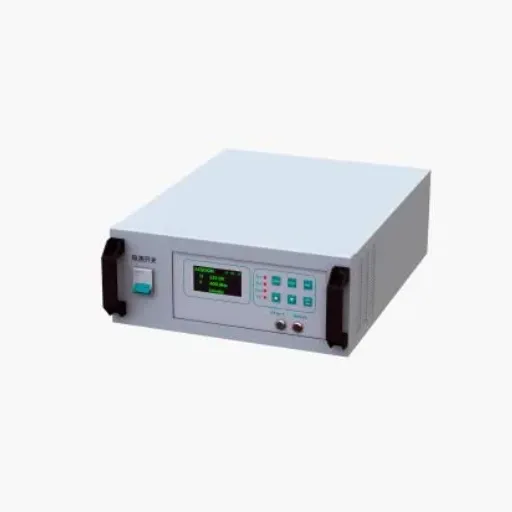
Select a frequency power supply by defining the load type, required output voltage and frequency, and total power demand including starting current. Then choose a converter type with a pure sine wave output, confirm capacity with a safety margin, and compare current model documentation before requesting a quotation.
Start with the load, not the supply
The most common selection mistake is shopping by price or by a generic kilowatt rating before defining what the supply must power. The load determines everything: the converter type, the capacity, and the output quality you need. Write down the answers to these questions before you contact any supplier:
What equipment will the supply power? Motors, heaters, instruments, and electronic controls behave very differently as loads, so your industrial equipment voltage and frequency requirements should be documented for each one.
What voltage and frequency does the load require? Check the equipment nameplate and documentation, for example 460 V / 60 Hz or 230 V / 50 Hz, and note whether single-phase or three-phase output is needed.
How many loads run at once? List every device that will operate simultaneously and add their power demands.
Is the load constant or variable? Test benches, production lines, and standby applications place different demands on the supply.
Where will the unit operate? Note ambient temperature, ventilation, dust, humidity, and available floor space at the installation site.
Here is an illustrative example. A facilities engineer we will call Jonas received three imported machines for a packaging line, each rated for 60 Hz operation. His plant grid supplied 50 Hz. Instead of checking the combined load first, he requested quotations for a supply sized to the largest single machine.
The suppliers who responded quickly flagged the gap: all three machines could run together, and the motors would draw several times their rated current at startup. Defining the real load changed the enquiry completely.
Note: Load figures, currents, and operating details in this article are illustrative. Confirm every rating against your equipment documentation and the supplier's current model documentation.
Once your load is documented, the equipment conversation becomes much more productive. If you want to see how a supplier handles this kind of enquiry, you can request model documentation for the category you are considering before you discuss a specific model.
Understand frequency power supply types
A frequency power supply takes your local mains input and produces a stable output at a different voltage, frequency, or both. The main categories differ in how they convert the power and how clean the output is.
Static frequency converters
A static frequency converter uses solid-state electronics to rectify the input and then invert it back to AC at the target voltage and frequency. Modern units are compact, efficient, and available from small bench models to large industrial ratings. This is the most common category for test labs, production lines, and facilities running imported equipment.
Within this category, output waveform is the critical distinction. A pure sine wave output closely matches utility power and suits sensitive electronics, instrumentation, and motors. A modified or distorted waveform can cause motors to overheat and instruments to misread. Confirm the documented output waveform and total harmonic distortion (THD) for the model under consideration.
Rotary frequency converters
A rotary converter uses a motor-generator set to produce the target frequency. These units are heavier and larger, but they tolerate harsh electrical environments and difficult loads well, and they provide natural isolation between input and output. They remain a practical choice for some heavy industrial and legacy applications. Confirm availability, footprint, and maintenance requirements before shortlisting this type.
Single-phase and three-phase output
Match the output configuration to your load. Many machines require three-phase power, while smaller equipment and test benches often need single-phase output. Some models accept a three-phase input and provide a single-phase output, or the reverse. Do not assume a configuration; confirm input and output arrangements in the model documentation.
| Application | Typical need | Type to discuss |
|---|---|---|
| Running imported 60 Hz machinery on a 50 Hz grid | Three-phase pure sine output | Static frequency converter |
| Product testing for export markets | Adjustable voltage and frequency | Static converter with adjustable output |
| Sensitive instruments and lab equipment | Low-distortion pure sine wave | Static converter with documented THD |
| Heavy industrial or harsh environments | Robust, isolated output | Rotary converter or industrial static unit |
This table reflects common industry practice, not a model recommendation. Confirm configurations and ratings for the specific model under consideration. Conversion works in both directions: a 50 Hz to 60 Hz converter serves export testing for North American markets, while a 60 Hz to 50 Hz unit runs imported machinery on a local grid.
Size the frequency power supply capacity correctly
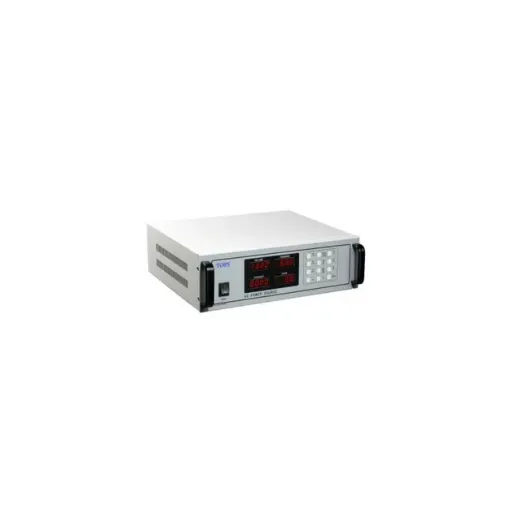
Capacity is where most frequency power supply selection errors happen. The rated kilovolt-amperes (kVA) or kilowatts on a datasheet are only the starting point. Your usable capacity depends on the load type and its starting behavior.
Account for starting current
Motors, compressors, and pumps draw several times their rated current when they start. A supply sized only for running load will trip or sag on every startup. Ask the supplier for the documented overload and surge capability of the model, and state your load's starting behavior in the enquiry. Loads with soft starters or variable-speed drives reduce this demand, so mention them if present.
In our second illustrative example, a test lab manager we will call Lin installed a supply sized exactly to the running load of an imported compressor test bench. Every test start tripped the unit's protection. The documented surge rating of a larger model, roughly twice the running demand for a few seconds, matched the compressor's inrush, and the nuisance trips stopped. Running watts alone had told her less than half the story.
Add a capacity margin
A common planning approach is to size the supply so the combined running load uses a comfortable share of the rated capacity, leaving headroom for starting surges, future equipment, and continuous-operation heat. Confirm with the supplier how the model's rating applies to continuous duty at your ambient temperature, because ratings can assume cooler conditions than your installation provides.
Check the input side too
The supply draws more from your mains than it delivers to the load, because conversion involves losses. Confirm the documented input current, input voltage range, and efficiency so your upstream circuit, breakers, and cabling can be sized correctly. If your input is three-phase, also confirm whether the unit requires a neutral connection and balanced loading.
Ready to move from planning to specifics? Prepare your load list, starting-current behavior, and site conditions, then discuss your frequency power supply requirements with the supplier so the recommendation can be checked against your situation.
Evaluate output quality and electrical requirements
Two frequency power supplies with the same kVA rating can perform very differently. Output quality decides whether your equipment runs correctly, so compare these documented parameters for each candidate model:
Output voltage and frequency range: The required set points, and whether output is fixed or adjustable across a range for testing applications.
Waveform and distortion: Pure sine wave output with a documented THD figure, tested under load conditions relevant to you.
Voltage and frequency regulation: How stable the output stays as the load changes. Regulation matters for motors, timers, and instruments.
Efficiency: Documented efficiency at your expected load level, which affects operating cost and heat rejection into the room.
Protection features: Overload, over-temperature, short-circuit, and surge protection appropriate to your application.
Measurement and display: Output metering that lets operators verify voltage, frequency, and current during operation.
Standards context helps here. The International Electrotechnical Commission publishes standards covering power electronic converters and electrical safety; see iec.ch for the current catalogue. For motor-related applications, the National Electrical Manufacturers Association provides guidance on how motors respond to voltage and frequency variation; see nema.org.
Research and test-method literature from the IEEE can support deeper technical evaluation. Whichever standards apply, ask the supplier to state in writing which requirements the specific model meets for your market.
Check installation, environment, and safety requirements
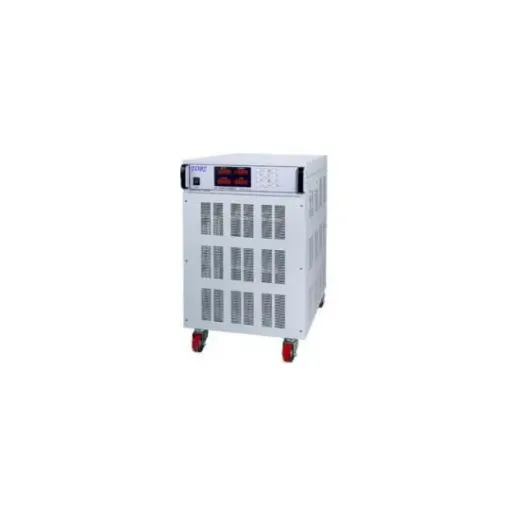
A frequency power supply is industrial electrical equipment. Review installation conditions before you finalize a model, not after delivery.
Environment and cooling
Confirm the documented ambient temperature range, humidity limits, and ventilation clearance for the model. Power electronics generate heat, and an undersized or poorly ventilated installation room shortens component life. Dusty or humid environments may require higher enclosure protection; state your site conditions in the enquiry and confirm the enclosure rating in writing.
Electrical installation and grounding
Confirm the input connection requirements, cable sizing guidance, breaker recommendations, and grounding arrangement from the installation documentation. Output wiring to the load should follow the supplier's guidance on cable length and routing, particularly for adjustable-frequency outputs.
In our third illustrative example, a distributor we will call Sofia received a complaint that instruments powered through a low-cost converter gave erratic readings. Investigation showed a distorted output waveform combined with long, unshielded output cabling. Replacing the unit with a documented pure sine wave model and correcting the cabling resolved the issue. Output quality and installation practice work together.
Operator safety
Frequency power supplies contain hazardous voltages on both the input and output sides. Plan for lockout procedures during maintenance, keep access panels closed during operation, and confirm that the installation meets your local electrical safety requirements. Request the safety section of the model documentation before installation begins.
Request documentation and confirm commercial terms
Price comparisons between suppliers are only meaningful when the underlying specifications are documented and comparable. For each candidate frequency power supply, request current documentation covering:
Model number and rated capacity in kVA or kW, with the duty and ambient conditions behind the rating
Input requirements: voltage range, frequency, phase, and input current
Output specification: voltage and frequency range, phase configuration, waveform type, THD, and regulation
Overload and surge capability, with duration limits
Efficiency and heat rejection at relevant load levels
Dimensions, weight, enclosure rating, and installation clearances
Protection features and safety documentation relevant to your destination market
Document version and date, so you know the information is current
Then confirm the commercial terms in writing for the specific model and order: quotation scope, lead time, delivery terms, warranty coverage, spare parts and service process, payment terms, and destination-market suitability.
Suppliers that work with international buyers, including XiAn Wisdom Computer Info&tech Co., Ltd, typically expect this kind of structured enquiry. The company lists frequency power supplies among its industrial equipment categories and states that quality management and after-sales support are central to its service approach. As with any supplier, confirm model availability, specifications, and service terms from current documentation before ordering. A technical documentation guide can help you structure the request.
Conclusion: define the load, then verify the model
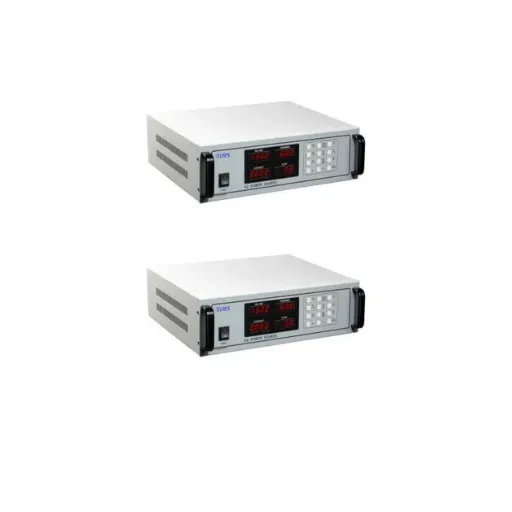
Selecting a frequency power supply becomes straightforward when you follow the right order of decisions. Keep these takeaways in mind:
Define the load first. Voltage, frequency, phase, power demand, and starting behavior determine every other choice.
Choose the right type. Static converters suit most applications; rotary units serve specific heavy-duty cases. Match single-phase or three-phase output to the load.
Size for starting current, not just running load. Confirm documented surge capability and add a capacity margin.
Compare output quality. Pure sine wave output, documented THD, and stable regulation protect your equipment.
Verify before you buy. Request current technical datasheets, installation requirements, and written commercial terms for the exact model.
Your next step is practical: write down your load list, nameplate requirements, starting behavior, and site conditions. Then share that information with your shortlisted suppliers and request model-specific documentation.
Request frequency power supply documentation or discuss your application →
A well-prepared enquiry gets you a correctly sized supply, a faster quotation, and equipment that runs the way its nameplate promises. That is how to select a frequency power supply with confidence: start with the load, verify the model details, and the rest of the decision follows.
Recently Posted
-
How to request a technical quotation for industrial equipment
August 17, 2026A purchasing assistant sends a one-line email to five suppliers: "Please quote your best price for a water pump." Two we Read More
 -
Custom mold drawing and tolerance requirements for buyers
August 17, 2026A custom mold arrives after eight weeks of tooling work. The first trial parts come off the press, and the snap-fit housing will n Read More
 -
What Information Is Needed for a PVC Molding Machine Enquiry
August 17, 2026A buyer who sends a PVC molding machine enquiry without the right technical details often receives quotes that cannot be compared Read More
 -
Power supply documentation checklist for industrial buyers
August 17, 2026Last March, Elena Vasquez received a shipment of frequency power supplies for a new cold-storage line. Elena is a procurement mana Read More

Contact Us
Recommended Products
-
 Large Capacity Ceiling Mounted Space Saving Indoor Pool DehumidifierNegotiableMOQ: 1 Piece
 -
Commercial Home Use Bathroom Dehumidification Swimming Pool Ceiling Mounted Mini DehumidifierNegotiableMOQ: 1 Piece
-
Greenhouse Grow Room Industrial Ceiling Mounted Duct Indoor Pool DehumidifierNegotiableMOQ: 1 Piece
-
Duokai OEM Indoor Dehumidifier Portable Swimming Pool Dehumidifier in Stock With CENegotiableMOQ: 1 Piece
-
High Quality Low Voltage ODM & OEM PLC Distribution CabinetNegotiableMOQ: 1 Set
-
Amy Autonomous Food Delivery Service Robot for Food Service in Hotels, Restaurants, and Commercial VenuesNegotiableMOQ: 1 Piece
-
6-Axis Automated Arc Welding Workstation for Steel Structure FabricationNegotiableMOQ: 1 Piece
-
Intelligent Inter-Row Weeding Robot Mower for Precision Agricultural CultivationNegotiableMOQ: 1 Piece
-
100kg Capacity Tumble DryerNegotiableMOQ: 2 Sets
-
Saladin Type Malt Production LineNegotiableMOQ: 1 Set
-
Seawater Desalination SystemUS$ 2000 - 1000000MOQ: 1 Set
-
High Speed Synthetic Lane Bowling Ball ReturnUS$ 50 - 2000MOQ: 10 Pieces
-
6-Axis Industrial Welding Robot for H-Beam Automatic Rail Welding StationNegotiableMOQ: 1 Piece
-
Long‑Reach Welding Robot JZJ06C‑180 6KG 1800mm Cutting ApplicationNegotiableMOQ: 1 Piece
-
Steering Gear Steering-sensitive Automotive PartsNegotiableMOQ: 100 Pieces